

MENTAL BLOCK CLINICS
BURLINGTON, ONtario and VIRTUAL ACROSS CANADA
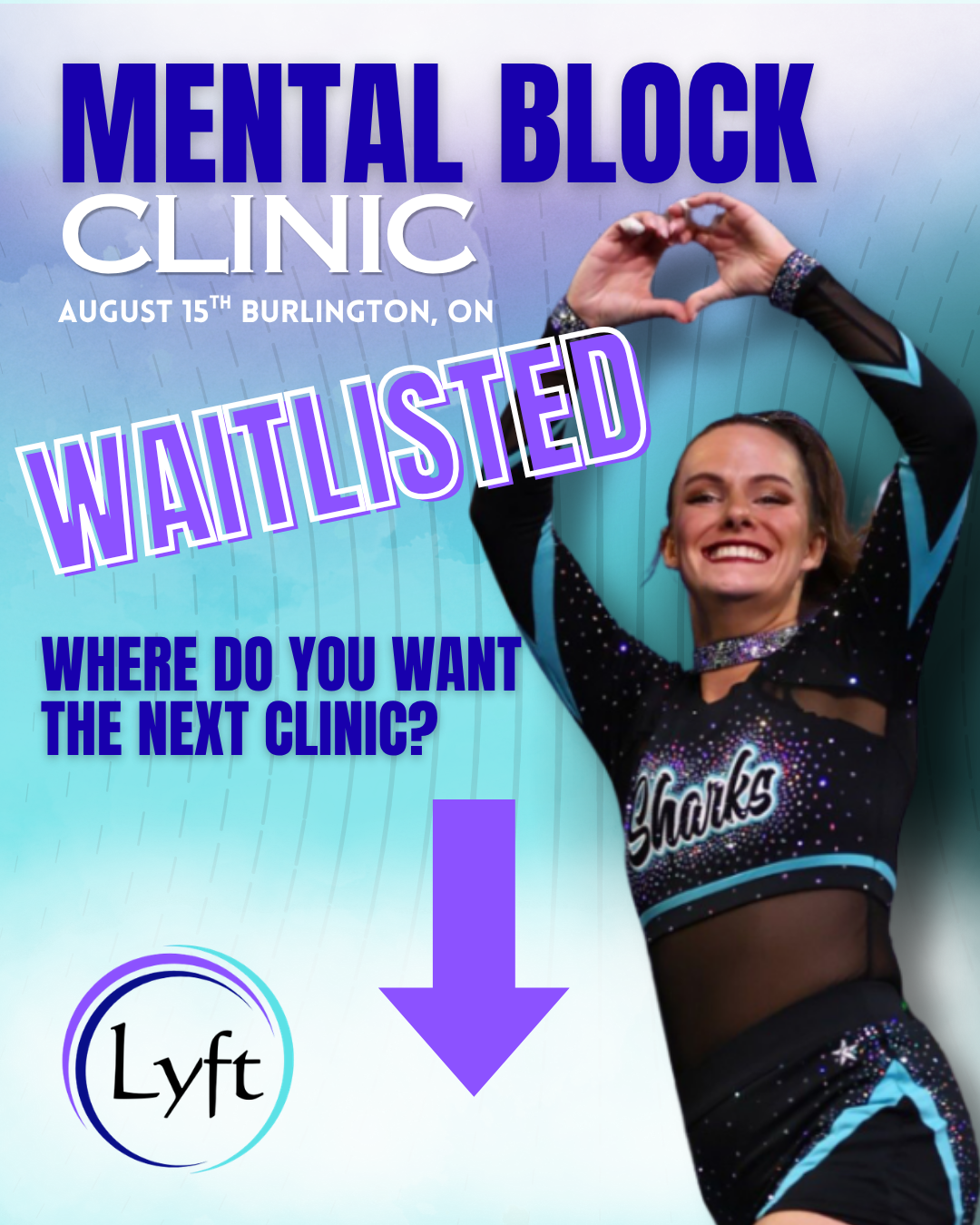
MENTAL BLOCK CLINIC DATES
Supreme Cheerleading - Burlington, On
Saturday clinics: 2:30 p.m.–7:30 p.m.
Sunday semi-private sessions: 1.5-hour appointments, starting at 10:00 a.m.
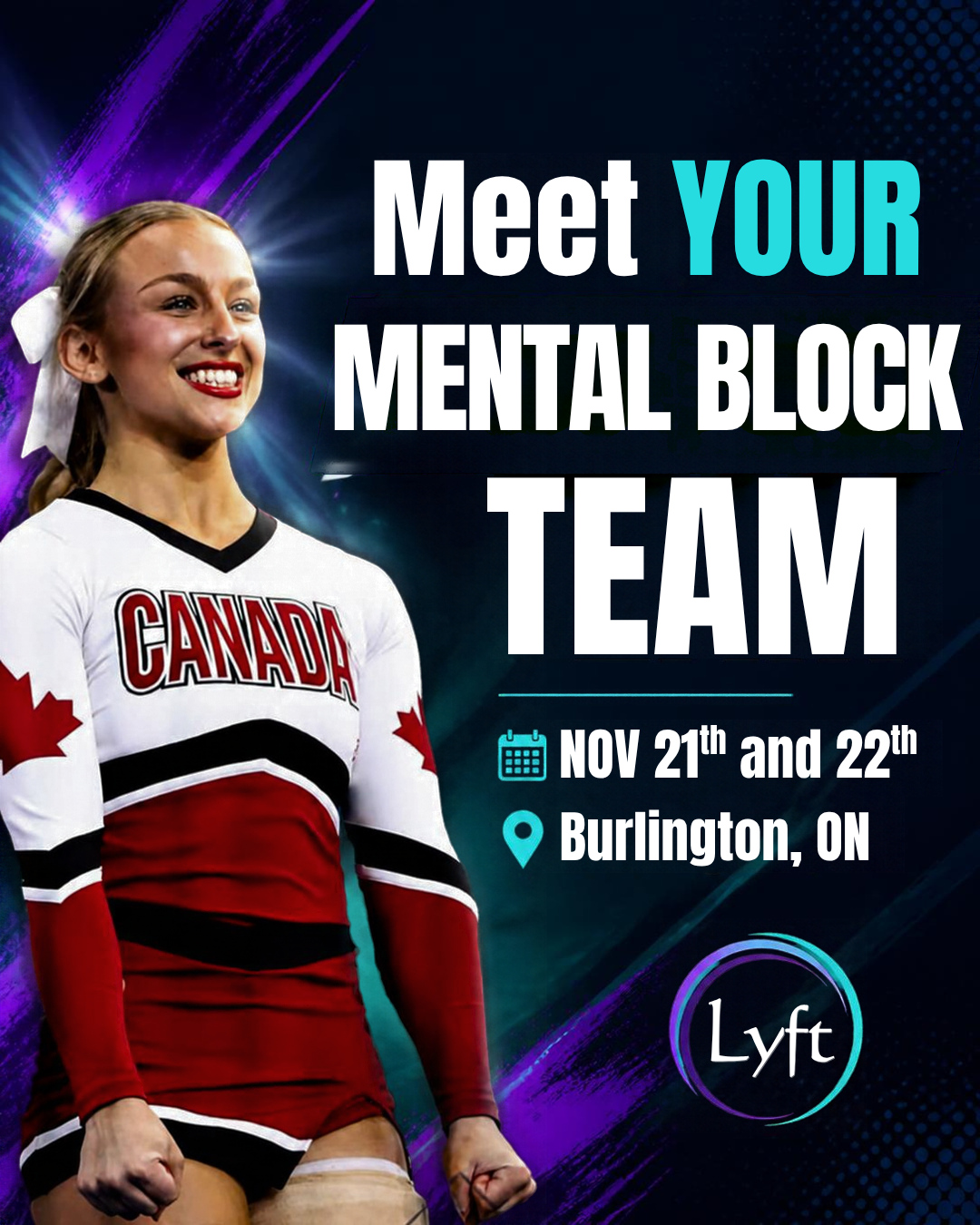
NOVEMBER 21st and 22nd
Supreme Cheerleading - Burlington, On
Saturday clinics: 1:00 p.m.–6:00 p.m.
Sunday semi-private sessions: 1.5-hour appointments, starting at 10:00 a.m.
DECEMBER 12th and 13th

What to EXPECT AT A MENTAL BLOCK CLINIC
-
A supportive day of learning, connection, and guided tumbling to help athletes understand their mental blocks and build confidence at their own pace.
Throughout the day, athletes will:
Learn about mental blocks and how the mind and body respond under pressure.
Practice tumbling in manageable steps, with guidance and opportunities to apply new strategies.
Explore regulation tools to help them respond to fear and stress.
Connect with other athletes through games, shared activities, and time together.
Reflect and plan ahead, identifying tools and next steps to support continued progress.
Breaks and regulation activities are woven throughout the day to keep the experience supportive and low-pressure.
-
1.5-Hour Semi-Private Sessions
These sessions pair a therapist with an experienced tumbling instructor to help athletes put mental performance strategies into practice.
Athletes receive individualized guidance as they work through fears, mental blocks, confidence challenges, and performance anxiety. Each session balances guided tumbling, conversation, reflection, and breaks, with space to move at their own pace.
Open to all athletes, whether or not they have attended a Mental Block Clinic.
-
A safe, supportive environment. Athletes can explore challenges without pressure to share or attempt a skill before they feel ready.
Practical tools and guided practice. We help athletes understand their nervous system, recognize their responses to pressure, and try strategies they can use in their tumbling.
Progress that looks different for everyone. Progress may mean understanding a fear, recognizing when a break would help, trying a manageable step, or feeling more comfortable participating. Returning a skill is not the only measure of success.
A foundation for continued support. What we learn during the clinic helps guide each athlete’s next steps. For some, the clinic complements individual therapy or other performance support.
-
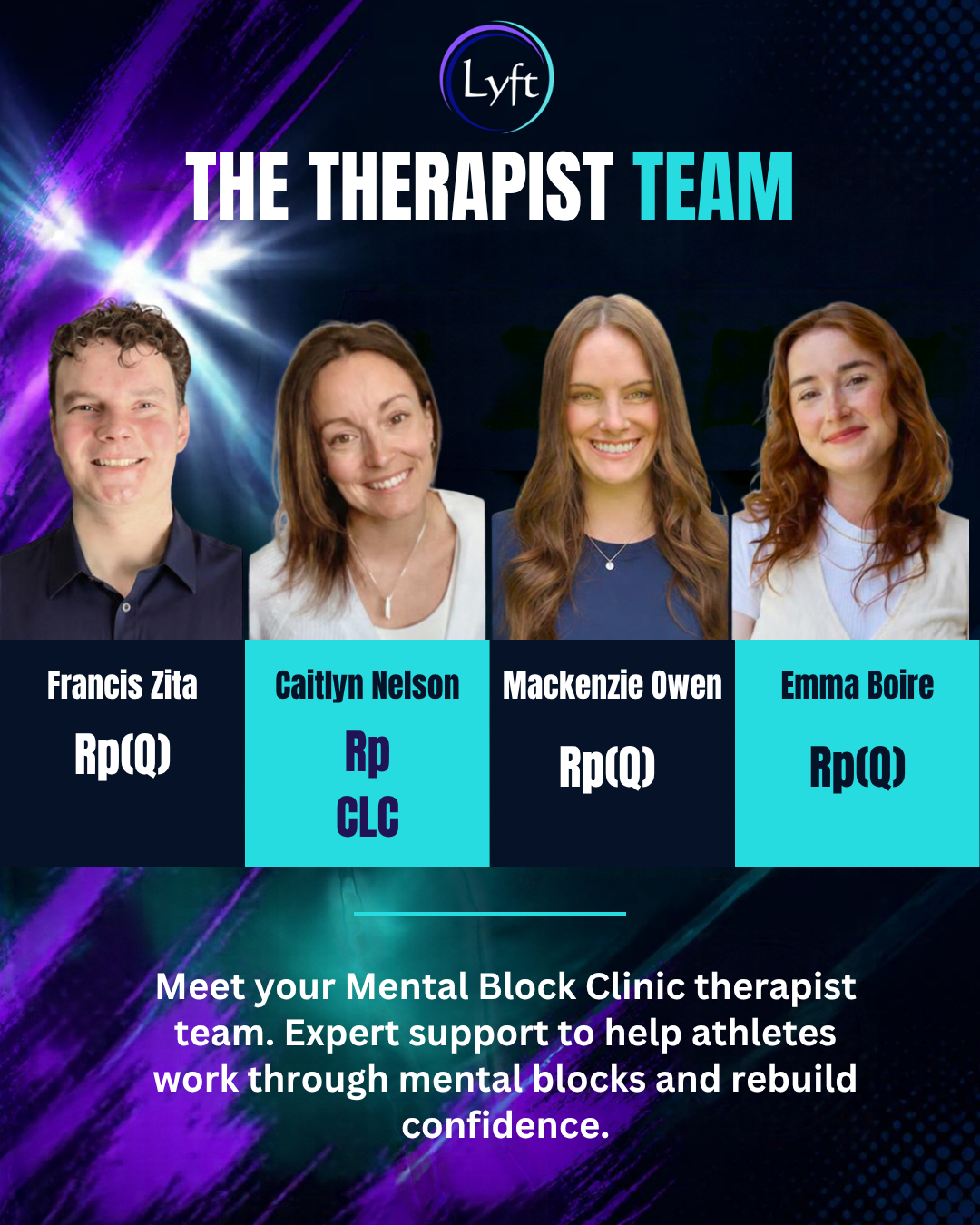
Our team’s role is to provide guidance, teach practical tools, and support athletes as they explore their mental blocks and practice tumbling in manageable steps.
The athlete’s role is to participate at their own pace and communicate what feels manageable or when they need support or a break. There is no expectation to perform a particular skill or share personal experiences.
Parents and caregivers can support progress by staying curious, acknowledging effort, and keeping expectations focused on learning and confidence rather than immediate skill return.
The shared goal is understanding and steady progress. This is not a skill repair clinic, and skill return is not guaranteed. Mental blocks may still appear in other environments or in response to different triggers. This is a normal part of how the nervous system responds and can help inform ongoing support.
Ready to join us?
See Our Clinics on Instagram
Get a glimpse of our clinics through our latest Instagram posts and videos. Follow along for clinic highlights, upcoming dates, and a closer look at what we offer.